
Beyond Automation: How Digital Connectivity Can Ease the Logistics Labour Crunch

The logistics industry is short of people, and the gap is not closing. Warehouses, ports, trucking fleets and planning teams across regions are struggling to hire and retain skilled workers.
Automation has been the default answer, from robotics in fulfillment centers to autonomous handling equipment at ports. It helps, but it is not enough.
What is becoming clearer is that labour shortages are not only a headcount problem. They are a productivity problem. Too many logistics workers still spend large parts of their day chasing information, reconciling data between systems or coordinating manually with trading partners.
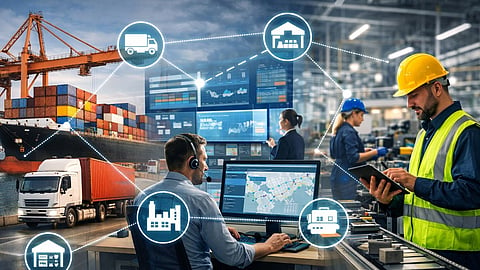
Connecting traders, manufacturers, and logistics providers digitally across the end-to-end supply chain offers a faster and often cheaper way to unlock capacity from the workforce that already exists.
In simple terms, better connectivity lets people do more meaningful work with less friction.
Turning Fragmentation into Shared Visibility
One of the biggest drains on logistics productivity is fragmentation. Shippers, forwarders, carriers and manufacturers often operate on separate systems, exchanging data through emails, spreadsheets, and phone calls. Every handoff introduces delays, errors, and extra work.
Amazon Bets On its Own Delivery Network as UPS Opts for Quality Over Quantity
Several large players have started to address this by building shared digital platforms rather than isolated tools. Maersk has invested heavily in integrating booking, documentation, tracking and customs processes across ocean, inland transport, and warehousing.
By giving customers and internal teams access to the same real-time data, Maersk reduces the need for manual follow-ups and rework. Planners can manage more shipments per person because they are not constantly resolving information gaps.
The productivity gain does not come from replacing people. It comes from removing the noise around their work.
Making Planners More Effective, Not Busier
Digital connection is especially powerful for planning roles, which are often hit hard by labour shortages. A transport planner who spends hours reconciling forecasts, inventory levels and carrier availability is less effective than one who sees those inputs in a single view.
Freight forwarders like Flexport have built systems that connect shippers, carriers, and customs data into one workflow. The result is not just faster execution, but higher productivity per employee. A single operations manager can oversee more accounts because exceptions are flagged automatically and routine decisions are supported by data.
This approach also shortens training time. New hires can become productive faster when the system guides decisions instead of relying on tribal knowledge passed down over years. In a tight labour market, that matters.
Connecting Factories to Logistics in Real Time
Manufacturers often feel labour shortages downstream, even when the root cause is upstream. A delayed production run, a last-minute change in order quantities or a lack of visibility into transport capacity can cascade into overtime, expediting and stressed teams.
Industrial giant Siemens has pushed for deeper integration between factory systems and logistics partners. When production schedules, inventory positions and shipment status are shared digitally, logistics teams can plan proactively rather than reactively.
Fewer surprises mean fewer fire drills and fewer fire drills mean fewer people burned out or leaving the industry altogether. In this model, digital connectivity acts as a force multiplier. The same number of logistics staff can support more volume because variability is reduced and decisions are made earlier.
Collaboration Over Competition
Another overlooked lever that we we have mentioned in our earlier reports is collaboration between logistics stakeholders who traditionally operate at arm’s length. Digital platforms make it easier to share forecasts, capacity commitments, and constraints without exposing sensitive commercial details.
Companies like DHL Supply Chain have experimented with control towers that connect multiple customers, carriers and sites. When demand spikes in one lane and softens in another, resources can be reallocated faster. This reduces the need for last-minute hiring or reliance on temporary labour, which is often scarce anyway.
Crucially, these systems help supervisors and frontline managers focus on coordination and problem-solving rather than administrative work. That makes roles more attractive and sustainable, which helps retention as much as efficiency.
A People-first Digital Strategy
Automation will continue to play a role in logistics, especially in physically demanding or repetitive tasks. But it should not distract from the bigger opportunity: using digital connectivity to respect people’s time and attention.
Labour shortages are unlikely to disappear soon. Demographic trends, skills gaps, and competition from other sectors will keep pressure on logistics employers. The companies that cope best will be those that treat digital integration as a productivity strategy, not an IT project.
By connecting traders, manufacturers, and logistics providers across shared data and workflows, the industry can unlock capacity that is already there.
The payoff is not just higher throughput. It is a more resilient, more attractive logistics sector where people spend less time chasing information and more time moving goods efficiently.
Read More: The Human Chain - Rethinking Logistics for the Age of Automation

