
Amazon Bets On its Own Delivery Network as UPS Opts for Quality Over Quantity
Amazon is accelerating its shift toward an independent delivery network after UPS confirmed a major reduction in the volume of packages it handles for the e-commerce giant.
UPS plans to cut the number of parcels it ships for Amazon by more than 50% through 2026, a move that reflects both carriers’ diverging priorities and Amazon’s drive to control its own parcel flows.
The strategic shift stems from UPS’s decision to prioritize higher-margin business segments and reduce reliance on large, low-profit shippers - even if that means scaling back shipments to one of its biggest customers.
Amazon once made up about 10–12% of UPS’s revenue, but declining margins on these shipments led UPS to adjust its strategy.
Moving Logistics In-house
For Amazon, the changing relationship has accelerated a long-term plan to build and expand its internal logistics capabilities.
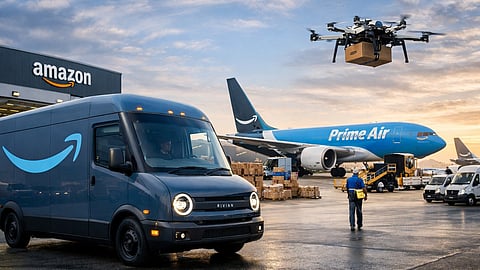
The company’s Amazon Logistics arm already operates thousands of delivery vehicles and coordinates a vast network of regional sortation centers and final-mile hubs, allowing it to deliver most packages itself, especially in urban and suburban markets.
Part of that self-reliance includes growing its fleet of branded delivery vehicles. Amazon has placed large orders for electric vans manufactured by Rivian, a key partner in its sustainability push.
Under a long-term agreement, Rivian is building tens of thousands of electric delivery vans that Amazon deploys across the US and abroad, helping reduce fuel costs while cutting carbon emissions.
Amazon’s expansion isn’t limited to ground transport. The company has rapidly scaled Amazon Air, its dedicated cargo airline, which moves millions of packages between regional hubs on overnight schedules.
This gives Amazon added capacity and flexibility during peak periods when traditional carriers may struggle with volume spikes.
To fill gaps left by carriers like UPS, Amazon continues to work with other third-party partners and delivery services. Regional carriers and contractors under the Delivery Service Partner (DSP) program help handle last-mile delivery in areas where Amazon’s own fleet isn’t yet large enough.
Some industry reports also note expanded use of carriers like FedEx for select package types, though Amazon does not view these partners as full replacements for UPS, but rather capacity supplements.
Adding to the complexity, Amazon’s longstanding relationship with the US Postal Service (USPS) is also in flux.
Talks over a renewed contract have stalled, and there is industry speculation that Amazon could cut postal volumes by the end of 2026 if a new deal isn’t reached. The shift that would further boost its drive toward internal delivery infrastructure.
Amazon's Technology Edge
Technology plays a major role in supporting the transition. Amazon uses advanced routing, forecasting algorithms, and warehouse automation to streamline fulfillment and reduce delivery times.
It’s also testing innovative solutions like drone delivery in select markets through Prime Air, though broader deployment is still in early stages.
For customers, Amazon says delivery reliability and speeds should remain steady or improve. In many major metropolitan areas, the company already handles the majority of its own deliveries. Executives view control over logistics as essential to maintaining fast service - especially during holidays and peak shopping events.
Competitive Advantage
The evolving logistics strategy reflects a broader ambition: to reduce dependence on legacy carriers and cement Amazon’s position as a dominant force in parcel delivery.
This transformation will continue to reshape the shipping industry as retailers and carriers alike adapt to a landscape where control of the delivery network is a critical competitive advantage.
Read More: UPS Announces 30,000 Job Cuts as It Reduces Reliance on Amazon Deliveries

