
Does Iran’s Selective Hormuz Transit Policy Signal a New Era of Controlled Shipping Lanes?

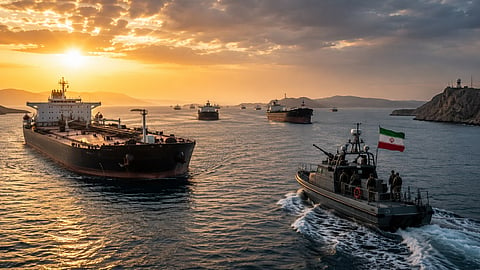
Iran has begun allowing a select group of countries, that includes China, India, Russia, Iraq, Pakistan, Bangladesh and the Philippines, to move oil tankers and cargo vessels through the strategically critical Strait of Hormuz under a tightly controlled transit framework, a move that is increasingly reshaping global maritime trade and alarming Western shipping powers.
The policy emerges after months of escalating military tensions involving Iran, the United States and Israel, which have severely disrupted commercial shipping across the Gulf.
Tehran has effectively introduced a permission-based transit regime in the strait, granting safe passage primarily to nations maintaining diplomatic or economic alignment with the Islamic Republic while subjecting other vessels to heightened scrutiny and delays.
The Strait of Hormuz remains one of the world’s most vital maritime chokepoints, handling nearly 20% of global oil and liquefied natural gas shipments during normal operating conditions.
Since the regional conflict intensified earlier this year, tanker traffic through the corridor has fallen sharply as insurers raised war-risk premiums and several Western-linked operators diverted vessels away from the Gulf altogether.
UAE Pushes Ahead With Second Fujairah Oil Pipeline to Bypass Hormuz by 2027
Iranian officials say the selective transit system is intended to ensure “regional stability” and protect friendly nations from security risks.
Tankers carrying crude cargoes bound for China and India have reportedly already crossed the waterway under Iranian monitoring arrangements, while Russia-linked energy shipments have also continued moving through the corridor with minimal disruption.
Shipping intelligence providers report that vessels from countries approved by Tehran are increasingly using designated coastal transit lanes supervised by Iranian naval and Revolutionary Guard assets.
In contrast, many European and US-linked ships continue rerouting around Africa’s Cape of Good Hope, significantly increasing voyage times and transport costs.
Dangerous Precendent?
Beyond the immediate commercial impact, maritime analysts warn that Iran’s actions could establish a dangerous geopolitical precedent for global shipping governance.
For decades, major international waterways such as the Strait of Hormuz, the South China Sea and key Arctic passages have operated under international maritime conventions that guarantee freedom of navigation regardless of political alignment.
Iran’s selective access model, however, introduces the concept of politically conditional maritime transit, effectively tying access to diplomatic relationships.
Industry observers fear other major powers could eventually adopt similar strategies in waters under their strategic influence.
China could use the precedent to impose tighter political controls over shipping activity in contested areas of the South China Sea, particularly during periods of military confrontation or sanctions disputes.
Meanwhile, Russia could attempt comparable restrictions across emerging Arctic shipping routes as melting ice opens new trade corridors linking Europe and Asia.
Analysts say such developments would fundamentally alter the structure of global maritime commerce, replacing the longstanding principle of neutral international waters with fragmented spheres of geopolitical influence.
“This is bigger than Hormuz,” said one Gulf-based shipping executive. “If access to strategic waterways becomes dependent on political loyalty, then the entire foundation of modern global trade begins to change.”
For global shipping companies, oil traders and logistics operators, the growing fragmentation of maritime access is now becoming one of the defining operational risks of international trade in 2026.
Read More: MSC Redraws Middle East Trade Routes Amid Hormuz Crisis

