
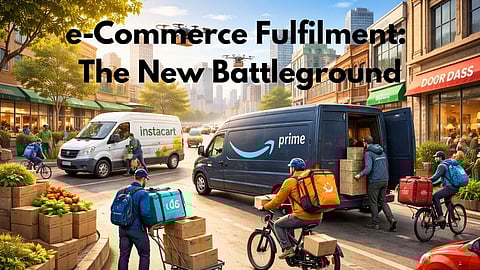
Big 3PLs Feel the Pressure as e-Commerce Gives Rise to Alternate Delivery Networks
The explosive growth of e-commerce has done more than shift where consumers shop. It is quietly reshaping how goods move, creating a new class of delivery networks that operate outside the traditional third-party logistics model.
These alternatives are now challenging the dominance of established carriers like FedEx, UPS, and DHL, forcing the industry to rethink its role in a faster, more fragmented market.
A Model Built for a Different Era
For decades, large 3PLs thrived by offering scale. They invested heavily in aircraft fleets, centralized sorting hubs, and global networks that few others could afford. Retailers and manufacturers relied on them as neutral intermediaries to move packages efficiently across long distances.
That model worked well when shipping volumes were predictable and delivery times were measured in days. Hub-and-spoke systems rewarded efficiency and consistency, and customers accepted limited visibility once a package entered the network.
e-Commerce Changes the Rules
E-commerce upended those assumptions. Online shopping created sharp spikes in parcel volumes, tighter delivery windows, and a customer base that increasingly expects next-day or even same-day delivery. Returns also surged, adding complexity and cost.
Returns Become Increasingly Critical in e-Commerce Supply Chains
Traditional networks, optimized for moving large volumes through centralized hubs, have struggled to adapt. Residential delivery is more expensive than commercial shipping, and missed delivery windows now carry reputational risks for merchants. Meeting these expectations often means higher costs that are difficult to pass on.
Platforms Build Their Own Networks
Into this gap stepped alternative delivery networks, many built or heavily influenced by e-commerce platforms themselves. The most prominent example is Amazon, which has spent years assembling an in-house logistics operation that includes aircraft, last-mile vans, and a web of independent delivery partners.
While Amazon still relies on traditional carriers for part of its volume, its growing internal capacity reduces dependence on external 3PLs and gives it greater control over speed, cost, and customer experience. That control has become a competitive advantage.
Flexibility Over Scale
Beyond the largest platforms, a broader ecosystem has emerged. Regional couriers, gig-based last-mile providers, and technology-driven startups now offer services that traditional carriers often cannot match.
Many focus on dense urban delivery, using bikes or electric vehicles to move packages quickly over short distances. Others specialize by product category, such as groceries or fashion, tailoring delivery windows and handling requirements. These networks prioritize flexibility and software-driven routing rather than nationwide infrastructure.
For merchants, the appeal is clear: faster delivery, lower costs in certain markets, and tighter integration with online storefronts.
Pressure Builds on Established Carriers
The rise of alternative networks is weakening one of the traditional 3PLs’ strongest advantages: control of the last mile. That final leg is the most expensive and the most visible to consumers. As e-commerce companies seek to own or closely manage it, large carriers risk being pushed toward lower-margin middle-mile and long-haul services.
The impact is already visible. Major carriers still move enormous volumes, but growth has slowed, especially in residential delivery. Pricing power is under pressure as large shippers negotiate aggressively or shift parcels elsewhere.
Adapting to a Fragmented Future
In response, established 3PLs are investing in automation, expanding weekend and same-day options, and offering more customized services. Some are acquiring smaller logistics firms or partnering with technology platforms to regain flexibility.
e-Commerce did not set out to disrupt logistics, but its demands have made the old model harder to sustain. Traditional carriers will remain essential for global trade and long-distance shipping. What is changing is their grip on the entire delivery chain, which is no longer guaranteed.
Read More: Insight - How Apple and Amazon are Turning e-Commerce Returns into Revenue

