
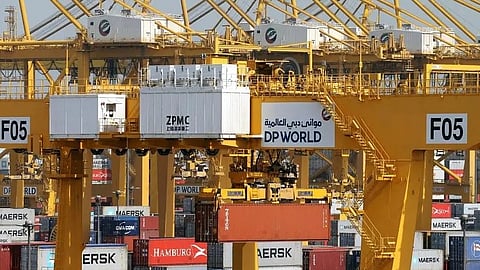
DP World Begins Operations at Jebel Ali Rail Terminal
DP World has officially begun operations at the Jebel Ali Rail Terminal, marking a major step in the integration of rail freight into the United Arab Emirates’ logistics network and strengthening multimodal cargo connectivity at the region’s largest port hub.
The company confirmed that customers can begin using the terminal immediately following the introduction of tariffs and operating conditions that took effect on March 1, 2026.
The facility will be managed and operated by DP World’s UAE Region under a concession arrangement with the port authority, according to a notice issued through the Dubai Trade portal.
Rail link Connects UAE’s Logistics Network
The new terminal forms part of the country’s growing rail freight ecosystem linked to the national railway operated by Etihad Rail. The system spans roughly 900 kilometres across the UAE, connecting key industrial and logistics hubs from the Saudi border at Ghuwaifat to the east-coast port of Fujairah.
DP World Reports Record US$24.4 Billion Revenue and US$6.4 Billion EBITDA for 2025
Through this network, Jebel Ali Port will now have direct rail connectivity with major logistics and industrial zones including Khalifa Port, the Industrial City of Abu Dhabi, Dubai Industrial City, Khorfakkan Port, Port of Fujairah and inland facilities such as Al Ghail Dry Port.
Industry analysts say the addition of a rail terminal at Jebel Ali - already the Middle East’s largest container port and one of the world’s busiest maritime hubs - will significantly improve inland cargo movement, reduce reliance on road trucking, and enhance supply chain resilience for regional trade flows.
Tariffs and Operational Framework Introduced
As part of the launch, DP World has introduced a Port Receiving/Releasing Charge (PRC) applicable to containers, bulk cargo trailers and general cargo that move through the rail terminal.
Charges vary depending on the cargo type and operational conditions, while some exemptions apply for containers transported directly via rail for export or inland distribution.
Higher charges are expected for cargo connected to the nearby Jebel Ali Free Zone (JAFZA), reflecting the additional logistics services and infrastructure provided within the zone.
Strengthening Supply Chain Resilience
The start of rail terminal operations comes at a time when regional logistics networks are facing disruption due to geopolitical tensions in the Gulf. In response, DP World has been implementing contingency logistics arrangements to keep cargo moving through its flagship hub in Dubai.
These measures include rerouting import containers through east-coast ports such as Fujairah and Khorfakkan before transporting them under bonded transit to Jebel Ali for final customs clearance.
The rail terminal is expected to play a role in enhancing these multimodal logistics options by providing a faster inland transport alternative.
Integrated Multimodal Logistics
With the launch of the Jebel Ali Rail Terminal, DP World is advancing its strategy to create fully integrated sea-rail-road logistics corridors across the UAE and the wider Gulf region.
By linking one of the world’s most important maritime gateways with the country’s national rail network, the project is expected to support faster cargo distribution, reduce congestion on highways and further strengthen Dubai’s role as a global trade and logistics hub connecting Asia, Europe and Africa.
Read More: All Jebel Ali Terminals Operating Normally: DP World

