
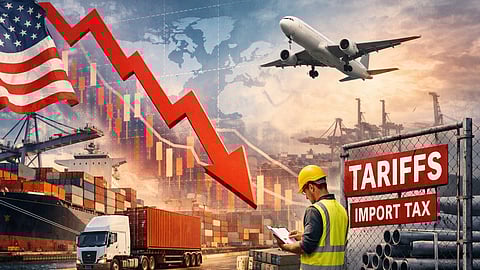
Tariffs Slow Growth and Reshape Global Logistics Networks
Over the past year, sweeping US tariff policy changes have increasingly rippled through international trade, slowing growth and forcing adaptation across the global logistics sector.
What began as targeted duties on specific imports has morphed into broad tariff threats and uncertainty that are reshaping traditional trade flows, disrupting shipping patterns, and creating cost pressures that logistics companies now grapple with worldwide.
According to recent industry commentary and expert analysis, heightened tariffs are forcing logistics players to rethink route planning, inventory strategies, and long-term growth forecasts amid uncertainty.
Falling Cargo Flows and Port Slowdowns
A clear early effect of the tariff regime has been a decline in inbound cargo volumes at major US ports - historically key hubs in global logistics chains. Ports such as the Port of Long Beach have reported significantly lower imports from China and other tariff-affected regions, causing stevedores and freight forwarders to reassess capacity planning.
Industry sources have noted that typical seasonal growth patterns, like the holiday peak in freight traffic, have not materialized in the US logistics sector. Container traffic has declined year-over-year, with companies drawing down inventories rather than booking new shipments in anticipation of tariff costs.
Shipping experts also warn that container lines and carriers may face depressed rates and volumes as cargo flows slow, a trend that could suppress investment in new capacity and technology, further dampening sector growth.
Tariff Uncertainty Breeds Higher Costs and Complexity
Logistics providers have absorbed rising operational costs due to tariffs and are passing these costs on to customers or negotiating new pricing structures.
Extended customs duty payments, more stringent documentation, and variable tariff treatment across trade lanes have added administrative load and unpredictability to cross-border transportation.
For example, a 25% tariff on imported steel and aluminum - and subsequent extensions to other materials and finished goods - has increased freight costing and slowed cargo clearance times at major gateways. These added costs often lead to longer lead times and higher freight bills that ripple through logistics pricing structures, affecting shippers and carriers alike.
The knock-on effects extend well beyond the US. A recent International Monetary Fund warning notes that ongoing tariff threats may slow global economic growth, a trend that could further suppress freight demand and reduce utilization rates in transport networks worldwide.
Supply Chains and Route Diversification
One of the most profound structural impacts has been the accelerated diversification of global trade routes. As US tariffs target traditional high-volume corridors - particularly between China and the United States - multinational corporations are relocating sourcing and manufacturing to alternative regions such as Southeast Asia, Mexico, or South Asia.
This shift has been a challenge for logistics firms accustomed to stable long-haul trade lanes. Freight forwarders must now invest in new infrastructure, build relationships in emerging markets, and manage complex route redesigns to stay competitive - a costly endeavor that slows the sector’s growth tempo.
For instance, companies are increasingly using multiple smaller ports and inland distribution hubs, rather than relying exclusively on established transpacific routes. While this provides diversification, it also fragments cargo flows and makes fleet and warehouse optimization more complex.
Sector Outlook: Mixed Signals for Growth
Tariffs have also elevated risk profiles for logistics real estate and equipment suppliers, as weakened demand for imports and industrial turnover could affect assets tied to warehousing and transportation hubs.
In automotive logistics - a bellwether for global freight patterns - new tariffs and supply chain disruption are projected to squeeze margins and cause seasonal volatility as manufacturers accelerate or defer shipments in response to tariff deadlines.
Yet, despite these headwinds, some industry observers note pockets of resilience. Diversification into emerging trade corridors and investment in digital freight platforms are helping firms adapt.
Analysts also point out that tariff-induced changes could open new growth opportunities for logistics providers in under-served regions poised to take share from traditional supply chains.
Supply Chain Redesign
US tariff policy has, over the past year, exerted a measurable drag on global logistics growth - from slowing port traffic and complicating freight operations to driving supply chain redesign and elevated operating costs. With further tariff threats and geopolitical uncertainty on the horizon, the sector’s growth trajectory remains clouded, demanding adaptive strategies from carriers, freight forwarders, and supply chain planners alike.
Read More: US Tariff Uncertainties are Shaking Up Global Freight Markets

