
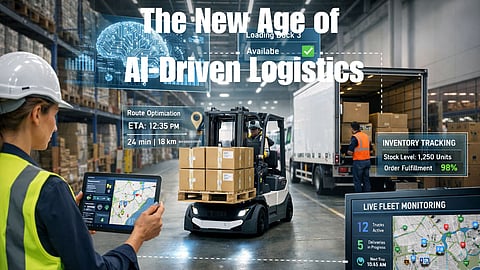
Turning Peaks into Performance: Data and AI are Already Transforming Transport and Logistics
As global supply chains grow more volatile and customer expectations narrow to same-day and even two-hour delivery windows, transport and logistics companies are turning to data and artificial intelligence (AI) to manage peak periods with greater precision.
From holiday retail surges to Ramadan-driven food imports in the Middle East, the ability to anticipate, allocate and adapt in real time has become a defining competitive edge today.
Peak periods are no longer confined to traditional shopping seasons. Flash sales, geopolitical disruptions and extreme weather can trigger sudden volume spikes at any time of the year.
Predictive Demand Forecasting: From Reactive to Proactive
All major major players in supply chain operations have started to use AI-driven demand forecasting tools to analyse historical shipment data, point-of-sale trends, macroeconomic indicators and even social media signals to predict surges before they actually materialise.
For third-party logistics (3PL) providers, predictive analytics allows earlier capacity planning - booking additional vessel slots, securing trucking capacity or repositioning empty containers. Airlines and express operators similarly rely on machine learning models to anticipate cargo loads, ensuring optimal aircraft utilisation during tight delivery cycles.
How Composable AI Agents are Reshaping Logistics Operations
The result is a shift from reactive firefighting to proactive orchestration. As AI gets more deeply embedded in day-to-day operations, companies that use the right AI tools to accurately forecast peaks reduce costly last-minute charters, demurrage fees and overtime labour expenses.
Dynamic Route Optimisation and Real-Time Visibility
Once freight is in motion, AI-enabled route optimisation platforms adjust in real time to traffic congestion, port bottlenecks or adverse weather. Using telematics, GPS and IoT sensor feeds, these systems continuously recalculate the most efficient routes while meeting strict delivery windows.
During peak retail seasons, last-mile delivery fleets can leverage AI to cluster deliveries geographically and dynamically assign drivers based on proximity and vehicle capacity. This reduces fuel consumption and improves on-time performance metrics.
Port operators are also increasingly integrating AI into yard management systems. Predictive berth scheduling tools minimise vessel waiting times by analysing arrival patterns and terminal throughput data. In high-volume gateways such as those in Dubai or Singapore, such systems help prevent cascading delays during peak trade cycles.
Intelligent Warehouse and Yard Operations
Inside distribution and fulfilment centres of Amazon, AI-driven robotics and warehouse management systems (WMS) streamline picking, packing and dispatch processes. Automated guided vehicles (AGVs) and robotic arms are reducing human bottlenecks during order surges, while AI algorithms prioritise high-urgency shipments to meet narrow cut-off times.
Data-driven slotting optimisation ensures that fast-moving stock is positioned closer to dispatch areas during forecasted peaks. Meanwhile, digital twins allow operators to simulate peak scenarios and test contingency plans without disrupting live operations.
For cold-chain operators, sensor-driven analytics monitor temperature, humidity and dwell times, ensuring compliance even during peak congestion. Alerts triggered by deviations enable rapid intervention before spoilage occurs.
Capacity Matching and Collaborative Platforms
AI also plays a growing role in capacity matching. Digital freight marketplaces use machine learning to connect available truck capacity with spot cargo demand, smoothing imbalances during peak periods. By analysing lane history, pricing patterns and driver availability, these platforms enable dynamic pricing and improved asset utilisation.
Although the industry is still working out a standard, global data-sharing mechanism, collaborative efforts between certain shippers, carriers and ports have demonstrated enhanced peak management.
Shared dashboards provide end-to-end visibility, allowing stakeholders to synchronise schedules and adjust production or shipping timelines in advance of bottlenecks.
In regions experiencing seasonal spikes - such as increased food imports ahead of Ramadan - integrated data platforms help align customs clearance, port handling and inland transport capacity to prevent chokepoints.
AI for Risk Anticipation and Contingency Planning
Tight delivery windows leave little margin for disruption. AI-powered risk engines assess geopolitical developments, labour strike signals, weather forecasts and network vulnerabilities to flag potential delays. Companies can then activate contingency routes or alternative suppliers before disruption hits.
Scenario modelling tools evaluate “what-if” conditions: What happens if a major port closes? How will a 20% spike in e-commerce volumes affect last-mile capacity? By quantifying these risks, logistics managers can pre-position inventory or secure backup carriers.
The Human–Machine Balance
While AI enhances operational agility, its effectiveness depends on data quality and workforce adoption. Investments in cloud infrastructure, cybersecurity and employee training are essential. Skilled planners must interpret AI outputs and override algorithms when necessary, particularly in volatile markets.
Moreover, ethical data governance and transparency are increasingly important as companies integrate cross-border data flows and customer information into predictive systems.
A Strategic Enabler
Ultimately, the use of AI and advanced data analytics during peak periods reframes logistics from a reactive cost centre to a strategic enabler of growth. Companies that harness predictive insights, dynamic routing and intelligent automation can meet tighter delivery windows without proportionally increasing cost.
As global trade remains susceptible to disruption and demand volatility, the transport and logistics sector’s ability to turn data into decisive action may determine who thrives during the next peak and who struggles to keep pace.
Read More: Supply Chain Tech Startups are Quickly Changing How the World Moves Goods

