
Shippo Brings World's First Agentic AI Platform to the Shipping Stack
Leading shipping platform, Shippo this month launched Shippo MCP, a new agentic shipping platform built on top of the company’s long-running multi-carrier API that promises to let AI assistants and developers execute real shipping tasks using plain English prompts.
By enabling AI agents, such as Claude, Cursor, or a platform’s built-in assistant, to translate user prompts into real shipping actions, Shippo MCP makes advanced shipping workflows more intuitive and accessible.
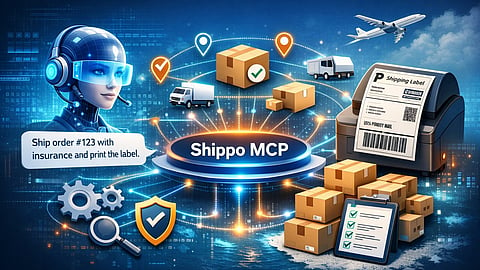
Shippo says the platform translates natural-language intent - for example “print a ground label for order #123 and add insurance” - into carrier-correct actions such as rate shopping, label creation, address validation and tracking updates.
The move positions Shippo squarely in the emerging wave of agentic AI tools: systems that do more than analyze and recommend, instead autonomously planning and carrying out multi-step tasks across services and APIs.
Industry writers and vendors increasingly describe agentic AI as Gen-AI’s next phase - one that adds model reasoning to real-time systems so agents can act on behalf of users with limited human intervention.
Supply Chains Enter a New Era as Agentic AI Moves from Concept to Core
Proponents argue this reduces developer overhead and speeds time to value; critics warn it raises new operational and governance risks when agents make irreversible decisions.
Technically, Shippo MCP sits atop the company’s decades-worth of shipping data and its existing multi-carrier API, which already standardizes integrations with dozens of carriers.
Laura Behrens Wu, CEO of Shippo said: “We built Shippo to make shipping easier, more intuitive, and accessible to everyone. AI gives us a powerful new way to advance that mission.
"With Shippo MCP, merchants can describe what they need using natural language, then instantly see and automatically run the workflows to accomplish it. It’s a smarter way to ship and allows anyone who sells online to be a shipping expert.”
The company frames MCP as a Model Context Protocol implementation that keeps shipping context, manifests decisions and surfaces suggested actions to human teams when appropriate.
For merchants and platforms, the practical benefits are straightforward: faster integration for AI-driven workflows, fewer engineering hours spent on edge-case carrier behavior, and the ability to embed shipping actions into conversational interfaces, customer service agents or automation pipelines.
Shippo’s materials highlight examples such as generating a return label during a chat with customer support, automatically rerouting a shipment after a missed pickup, or letting a branded chatbot get shipping quotes and print manifests without a developer in the loop.
That said, industry watchers note several areas to watch as agentic shipping platforms scale. Autonomy introduces risk when agents make decisions that affect costs (carrier selection), compliance (international documents) or liability (insurance and declared value).
Observability, human-in-the-loop controls, and audit trails will be crucial; Shippo’s messaging indicates MCP preserves context and decision logs, but independent audits and customer controls will likely determine enterprise adoption speed.
Shippo’s launch follows a broader push by logistics and cloud vendors to operationalize agentic AI across supply chains - from autonomous procurement agents to incident-handling bots - a trend analysts say accelerates operational efficiency but demands clear governance and real-time data plumbing.
For many e-commerce teams, the promise is compelling: conversational shipping that behaves like a seasoned logistics specialist without the months of integration work.
As Shippo rolls out MCP to developers and high-volume shippers, the company will face the twin tests of keeping carrier integrations robust and earning customers’ trust that an AI agent won’t make costly or noncompliant choices.
If successful, MCP could reshape how merchants add shipping functionality by turning a manual stack of APIs and carrier quirks into a conversation that gets cargo and parcels moving.
Read More: DHL Supply Chain Integrates Agentic AI Into New Global Operational Model

