
Insight: The Power and Perils of Centrally Controlled Logistics Robots
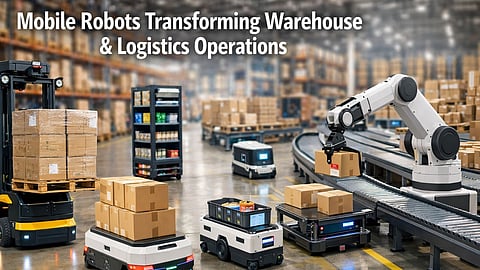
Mobile robots are no longer a novelty in warehouses, factories, and distribution centers. From autonomous forklifts to small robots ferrying totes across fulfillment floors, fleets of mobile machines now handle tasks once done entirely by people.
Behind many of these deployments is a centralized control system: a single software platform that plans routes, assigns tasks, and monitors robot behavior in real time. While this approach offers clear advantages for efficiency and safety, it also introduces new risks that logistics operators must weigh carefully.
One Brain, Many Machines
At its core, centralized control gives managers a unified view of operations. Instead of each robot making decisions in isolation, a central system coordinates the entire fleet. This allows tasks to be assigned based on real-time priorities, battery levels, traffic conditions, and workload balance.
Automation as a Service: Leveling the Technology Playing Field for Smaller Logistics Companies
For day-to-day logistics, this can translate into smoother operations. Robots spend less time idle or stuck in congestion, and high-priority orders are more likely to move quickly through the system.
Efficiency at Scale
Efficiency gains are one of the strongest arguments for centralized control. With a global view of the facility, the system can optimize routes to avoid bottlenecks and reduce travel distance.
For example, if multiple robots need to pass through the same narrow aisle, the controller can sequence their movements instead of letting them compete for space.
Centralized scheduling also makes it easier to integrate robots with other systems, such as warehouse management software or conveyor lines, aligning robotic tasks with inbound shipments and outbound deadlines.
Safer, More Predictable Floors
Safety is another major benefit. Centralized systems can enforce consistent safety rules across the fleet, such as speed limits in high-traffic areas or restricted zones near human workers.
When a hazard is detected, such as a blocked exit or a spill on the floor, the controller can reroute all affected robots at once. This coordinated response reduces the chance of collisions and makes robot behavior more predictable for human staff, which is critical in mixed environments.
The Single Point of Failure Problem
The most obvious weakness of centralized control is its reliance on a single point of decision-making. If the central server goes down due to a software bug, network outage, or cyberattack, large parts of the robotic fleet may be forced to stop or revert to limited fallback behavior.
In a busy logistics operation, even a short disruption can ripple through schedules, delay shipments, and frustrate customers.
When Fleets Get Too Big
Scalability can also be a challenge. As fleets grow from dozens to hundreds of robots, the computational load on the central system increases.
Planning routes and resolving conflicts for many robots in real time requires robust infrastructure and careful system design. If performance lags, decisions may arrive too late to be useful, leading to hesitation, unnecessary stops, or inefficient movements on the floor.
Too Centralized to Adapt?
There is also the question of flexibility. Centralized control tends to favor standardized behavior, which can be a drawback in dynamic or unpredictable environments.
Human workers often adapt on the fly, taking shortcuts or improvising around obstacles. Robots governed by a central system may respond more slowly to local changes if they must wait for instructions, especially when network latency is an issue.
Why Autonomy Still Matters
From a safety perspective, over-reliance on central control can mask local risks. If a robot’s onboard sensors or decision logic are too limited, it may not react appropriately to sudden hazards without guidance from the central system.
Best practice increasingly points toward hybrid approaches, where robots retain enough autonomy to stop, avoid collisions, or safely shut down even if communication is lost.
Finding the Right Balance
In practice, the impact of centralized control on efficiency and safety depends on how it is implemented. Well-designed systems with redundancy, local autonomy, and strong cybersecurity can deliver substantial gains while minimizing risk.
Poorly designed ones can introduce new vulnerabilities into operations that already run on tight margins.
As logistics operations continue to automate, centralised control systems will remain a powerful tool. The the key question for operators is not deciding whether to use them, but how to balance central coordination with local intelligence to keep goods moving efficiently and people safe on the floor.
Read More: Meet Blue Jay and Project Eluna - Amazon’s Latest Robotics and AI Technologies

