
Strait of Hormuz Reopens, Shipping Industry Gives the News a Cautious Welcome
Iran’s foreign minister has today announced that the country will reopen the strategically critical Strait of Hormuz to all commercial shipping for the duration of an ongoing ceasefire involving Iran, Israel, Hezbollah, and the United States.
The move marks a sharp, if temporary, shift after weeks of near-total disruption to one of the world’s most vital energy corridors. The safe passage however, has been earlier described by Iran as routes hugging the northern, Iranian coast of the strait while avoiding a most-likely-mined "danger zone" to the south towards the coast of Oman.
The strait, which carries roughly a fifth of global oil supply, had effectively been closed since late February amid escalating conflict, naval blockades, and mine-laying operations that left hundreds of vessels stranded and global energy markets on edge.
While Tehran’s announcement signals a willingness to stabilize maritime traffic, the shipping industry has responded with caution rather than relief.
Major tanker operators and insurers are unlikely to resume normal operations immediately, citing unresolved risks. Even during earlier ceasefire periods, traffic remained limited, with most established shipping firms staying away and only smaller or risk-tolerant vessels continuing transit under tightly controlled conditions.
Industry analysts say companies will likely proceed in phases. Initial movements may involve escorted convoys, shorter routes, and selective cargoes, particularly where state backing or military protection is available.
Insurance premiums are expected to remain elevated, and some firms may continue diverting shipments through alternative Gulf ports or delaying voyages altogether until the ceasefire proves durable.
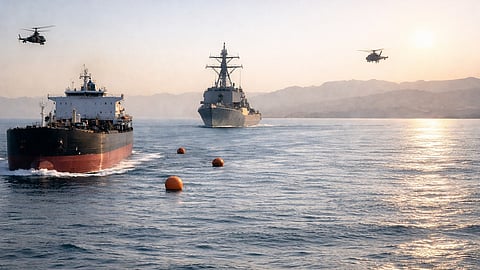
There is also lingering uncertainty over overlapping enforcement by Iranian forces and the US Navy, as well as the potential presence of unexploded mines.
Without a clear, unified security framework, shipping executives view the reopening less as a return to normal and more as a “conditional corridor” dependent on political stability.
For now, the Strait of Hormuz is open on paper. In practice, the global shipping industry is treating it as cautiously accessible, watching closely to see whether the ceasefire holds or unravels.
Read More: Beyond Oil - Continued Strait of Hormuz Blockade Disrupting Gulf Food Supply Chains

