
Strait of Hormuz Crisis Fuels Aqaba Port’s Emergence as Cargo Transit Hub
Jordan’s Aqaba Port is rapidly positioning itself as a critical transit cargo hub as prolonged disruptions in the Strait of Hormuz continue to reshape regional and global shipping patterns.
The ongoing geopolitical tensions linked to the 2026 Iran conflict have severely curtailed vessel traffic through the strategic waterway, historically responsible for roughly one-fifth of global oil flows.
Recent data shows ship movements through the strait remain well below normal averages, underscoring persistent instability and risk for carriers.
Meanwhile, energy shipments are increasingly being rerouted via unconventional methods such as ship-to-ship transfers outside the Gulf, reflecting the scale of disruption.
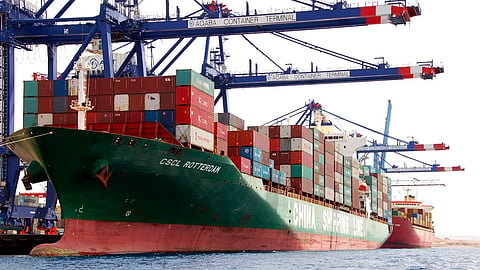
Against this backdrop, Jordan’s Red Sea gateway at Aqaba has emerged as a viable alternative logistics corridor. The Port of Aqaba, and particularly the Aqaba Container Terminal, has recorded a surge in transit volumes as shippers seek to bypass the Gulf.
Transit cargo volumes rose by more than 155% in the first half of 2026 compared to the previous year, driven largely by rerouted shipments destined for Iraq.
Previously, much of Iraq’s cargo flowed through its southern Gulf ports, heavily reliant on Hormuz access. However, with maritime risks escalating, goods are now increasingly discharged at Aqaba and transported overland - often across a 700+ km trucking corridor - into Iraq and neighbouring markets.
MSC to Partially Restore Suez Canal Transits
This multimodal workaround has significantly boosted Jordan’s trucking, warehousing, and logistics sectors.
Analysts note that Aqaba’s appeal lies not only in its geographic position outside the immediate risk zone, but also in its operational stability. While several regional ports have faced disruptions or restrictions, Aqaba has maintained steady operations, enabling it to absorb diverted cargo flows efficiently.
The shift is also accelerating long-term infrastructure planning. Jordan is advancing rail connectivity projects linking Aqaba to inland and cross-border markets, aiming to solidify its role in emerging trade corridors.
Broader regional investment trends suggest a growing focus on alternative routes that bypass chokepoints like Hormuz, with ports, pipelines, and inland logistics networks being reconfigured accordingly.
Industry stakeholders believe that even if tensions ease, some of the rerouted cargo flows could become permanent. The current crisis has exposed structural vulnerabilities in global supply chains, prompting shippers to diversify routes and reduce dependence on single maritime chokepoints.
As a result, Aqaba is not just benefiting from a temporary surge - it is increasingly being viewed as a strategic node in a rebalanced Middle East logistics map, with the potential to retain its newfound prominence well beyond the current crisis.
Read More: DP World Sets Monthly Throughput Record at SCT, Jeddah Islamic Port

