
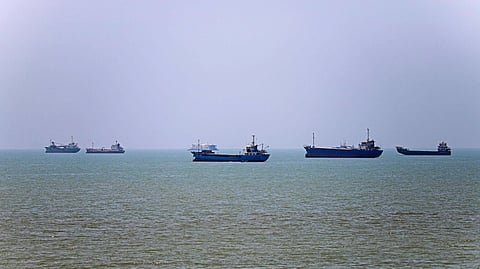
Shipping Through the Strait of Hormuz Disrupted Once Again as US-Israel-Iran Conflict Escalates
Shipping through the Strait of Hormuz has slowed sharply over the past 48 hours following a renewed exchange of military strikes between the United States and Iran, raising fresh concerns over global energy supplies and maritime security.
The Strait of Hormuz is operating under a 'SEVERE' threat level following multiple attacks on commercial vessels. On July 8, three commercial ships were struck by explosive projectiles, and on July 7, a Qatari LNG tanker and a Saudi crude oil tanker were damaged
According to vessel-tracking data, tanker traffic has fallen to a fraction of normal levels, with many commercial ships delaying transit or turning back due to the heightened threat environment.
Several vessels have reportedly switched off Automatic Identification System (AIS) transponders to reduce the risk of being targeted, while insurers are reassessing war-risk coverage for ships operating in the Gulf.
Underwriters have recommended suspending voyages through the waterway.
Jebel Ali Port operations were normal with 16 ships expected in the next 30 days.
Khor Fakkan Container Terminal is fully operational as of July 8, 2026, with all six berths active and general cargo and container discharge proceeding without disruption, handling a significant increase in cargo calls. A navigational warning has been issued for intermittent GPS signal spoofing and jamming in offshore areas of Fujairah, advising mariners to consider the area high risk.
The latest disruption follows a series of US military strikes against Iranian targets that Washington said were carried out in response to attacks on commercial shipping in the Strait of Hormuz.
US Central Command reported striking dozens of Iranian military facilities, including missile and drone storage sites, air-defence systems, naval assets and logistics infrastructure near the southern coast.
Reports indicate more than 80 military targets were hit during the operation, marking the most significant US action against Iran since a ceasefire was announced last month.
Israel has continued to coordinate closely with Washington while maintaining pressure on Iranian military capabilities, although the latest wave of strikes has been led primarily by US forces.
The renewed military campaign has placed additional strain on an already fragile ceasefire and significantly increased fears of a wider regional conflict.
Iran responded with missile and drone attacks targeting US military installations across the Gulf region. Authorities in Bahrain and Kuwait confirmed incoming projectiles and activated air-defence systems, while reports also indicated alerts at US facilities in Qatar.
Iranian officials said the strikes were retaliation for US attacks on Iranian territory and warned that further action could follow if military operations continue. Regional governments have heightened security around key energy infrastructure as concerns grow over the potential for additional attacks.
The renewed fighting has pushed oil prices higher and reignited fears over the security of one of the world's most important maritime chokepoints.
Roughly one-fifth of globally traded oil passes through the Strait of Hormuz, meaning any prolonged disruption could have significant consequences for energy markets, shipping costs and the broader global economy.
While diplomatic channels remain open, the rapid deterioration in security over the past two days has increased the risk of further military escalation across the Gulf.

