
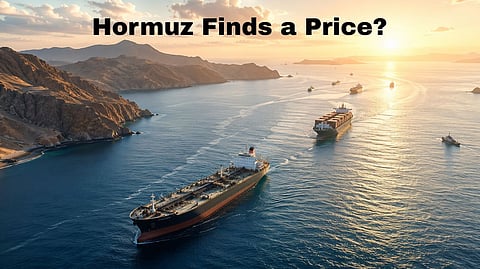
Hormuz Fee Proposal Gains Momentum as Iran and Oman Seek New Shipping Framework

A Gulf-backed proposal that would allow Iran to collect voluntary transit fees from vessels using the Strait of Hormuz is emerging as one of the most significant diplomatic initiatives since the waterway became the center of this year's regional conflict, raising cautious hopes that commercial shipping could gradually return to normal.
According to regional officials, Oman has presented Tehran with a framework for jointly managing the Strait of Hormuz under a regional mechanism supported by Gulf Cooperation Council (GCC) states.
Rather than imposing mandatory tolls, the proposal would establish a voluntary contribution system designed to fund navigation safety, maritime security, environmental protection and emergency response across one of the world's most strategically important shipping lanes.
A Regional Alternative to Confrontation
The proposal reportedly draws inspiration from the Strait of Malacca, where user-supported funding helps finance navigational services without restricting the internationally recognized right of transit passage.
Two Straits, One Crisis: Houthi Attacks on Saudi Tankers Push Oil Back Above US$100
Gulf officials hope the arrangement would provide Iran with a face-saving economic incentive while reassuring international shipping companies that passage through Hormuz will remain open and predictable.
The initiative comes after months of disruption caused by the conflict between Iran, the United States and Israel, which sharply reduced tanker traffic through the Strait of Hormuz.
Although military operations have eased in recent days, vessel movements remain well below normal levels as shipowners continue to weigh security risks and elevated insurance costs.
Diplomacy Shows Signs of Progress
Diplomatic momentum has increased following comments from U.S. President Donald Trump suggesting negotiations with Iran have become more constructive, while Oman continues to serve as the principal intermediary between Tehran and Washington.
However, Trump has also warned that military action could resume if diplomacy breaks down, underscoring the fragile nature of the current pause in hostilities.
Potential Relief for Global Shipping
For global shipping and energy markets, the proposal could prove highly significant. Roughly one-quarter of global seaborne oil and a substantial share of liquefied natural gas exports normally transit the Strait of Hormuz.
Even a partial restoration of confidence could reduce freight rates, ease marine insurance premiums and improve energy supply security for Asia and Europe.
Legal and Operational Questions Remain
Nevertheless, important questions remain unresolved. Maritime legal experts note that any payment system must remain genuinely voluntary to comply with international law governing transit passage through international straits.
Negotiators must also determine how revenues would be administered, how maritime security responsibilities would be shared among regional states, and whether major shipping nations and insurers will accept the arrangement.
A New Model for Hormuz?
While the proposal is still under negotiation, its broad backing from Gulf states suggests regional governments increasingly favor a cooperative, economically driven solution over continued military confrontation.
If finalised, the agreement could reshape governance of one of the world's most critical maritime chokepoints while offering the first meaningful pathway toward restoring confidence in Gulf shipping since the crisis began.
Read More: Beyond Hormuz: Is the Geography of Global Trade Being Rewritten?

