
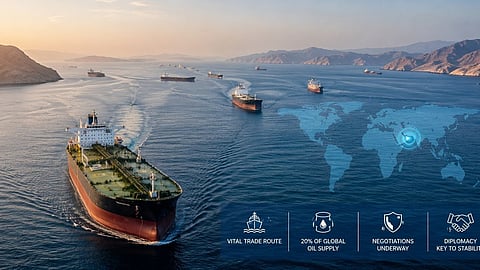
Global Shipping Awaits Hormuz Deal as Oil Markets Watch Every Move
Negotiations to reopen the Strait of Hormuz have gathered momentum, raising cautious optimism that one of the world's most strategically important maritime chokepoints could soon return to normal operations.
However, significant political, security and commercial obstacles continue to delay a full resumption of shipping through the vital waterway.
Talks involving Iran, Oman and the United States have reportedly advanced toward an interim framework that would allow commercial vessels to begin transiting the Strait under a phased reopening plan.
These discussions come after weeks of heightened regional tensions that have severely disrupted global energy markets and international shipping.
While diplomats describe the negotiations as constructive, no final agreement has yet been reached, leaving shipowners, insurers and energy markets watching developments closely.
Phased Reopening
According to reports, negotiators are considering a gradual reopening that would initially permit limited commercial traffic while remaining maritime security concerns are addressed.
The proposal includes coordinated vessel movements, continued inspections of shipping lanes and the clearance of any remaining naval hazards before unrestricted navigation resumes.
Reports also suggest discussions over a designated "middle corridor" through the Strait that could provide vessels with a safer transit route during the initial reopening phase.
A phased approach would help rebuild confidence among international shipping companies that remain wary of returning to the region following months of disruption.
Transit Fees Remain Biggest Obstacle
Despite encouraging diplomatic progress, several critical issues remain unresolved.
One of the most contentious points is Iran's reported proposal to impose transit fees on vessels passing through the Strait. Reports indicate Tehran is seeking charges equivalent to between 5 and 7% of cargo value, while Oman has reportedly proposed a significantly lower fee structure.
The United States continues to oppose any new transit charges, arguing that freedom of navigation through international waterways should remain unrestricted.
Another sensitive issue concerns Iran's proposed role in coordinating inbound vessel movements. While Tehran argues the arrangement would improve maritime security, several Gulf states and Western governments remain concerned that such authority could provide Iran with greater strategic leverage over one of the world's most important energy corridors.
Shipping Volumes Remain Depressed
Although discussions continue, commercial shipping activity remains far below normal levels.
Recent vessel tracking data indicates that only a fraction of the ships that previously used the Strait are currently making the passage. Before the crisis, well over one hundred commercial vessels transited the waterway each week.
Current traffic remains significantly lower as many shipping companies continue to reroute vessels or delay voyages until a comprehensive agreement is reached.
Marine insurers also remain cautious. Elevated war-risk premiums continue to add substantial costs for operators considering a return to the region, while ongoing sanctions-related uncertainties further complicate commercial decision-making.
Oil Markets Remain Highly Sensitive
The uncertainty surrounding the Strait continues to influence global energy markets. Oil prices initially eased amid optimism that negotiations were nearing a breakthrough before rebounding as investors assessed the remaining obstacles to a final agreement.
Even a partial reopening would improve confidence in global oil supply chains, although prices are likely to remain volatile until commercial traffic normalises.
The Strait of Hormuz carries (or used to carry) roughly one-fifth of global oil consumption, making any disruption to shipping a major concern for energy-importing nations and commodity markets worldwide.
Industry Expects Gradual Recovery
Shipping executives believe that even if political negotiations conclude successfully in the coming days, a return to pre-crisis traffic levels is unlikely to happen immediately.
Most analysts expect shipping companies to adopt a cautious approach, gradually increasing sailings as security conditions stabilise and insurance costs decline. Energy exporters across the Gulf are also expected to restore capacity progressively rather than resume full operations overnight.
For now, the diplomatic momentum represents the strongest indication yet that the Strait of Hormuz may soon reopen.
Nevertheless, until outstanding disputes over transit fees, governance arrangements and maritime security are resolved, one of the world's most critical shipping lanes remains only partially accessible, leaving global supply chains and energy markets in a state of cautious anticipation.

