
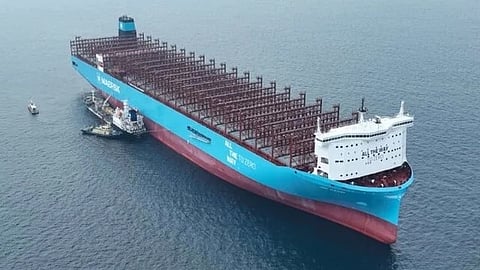
Astrid Maersk Completes Smooth Transit Through Suez Canal
The container vessel Astrid Maersk has successfully completed its transit through the Suez Canal, marking another smooth passage along one of the world’s most critical shipping routes.
The ship entered the canal under the supervision of the Suez Canal Authority and navigated the waterway without incident.
Canal officials confirmed that the transit proceeded according to schedule, with tug assistance and onboard pilots guiding the vessel through the narrow stretches of the 120-mile corridor linking the Mediterranean Sea to the Red Sea.
Astrid Maersk is part of the fleet operated by Danish shipping giant A.P. Moller–Maersk, one of the largest container carriers in the world.
The vessel is designed to transport thousands of containers across major global trade lanes, connecting Asia, Europe, and beyond. Its successful transit underscores the continued importance of the Suez Canal as a key artery for international commerce.
Roughly 12% of global trade passes through the canal, making it a strategic chokepoint for goods ranging from electronics and machinery to food and energy products. Any disruption along the route can send shockwaves through supply chains, as seen in previous years when blockages and regional tensions temporarily halted traffic.
In this case, however, operations ran smoothly. According to maritime tracking data, Astrid Maersk maintained a steady convoy speed as it joined other northbound vessels making the journey toward the Mediterranean. Weather conditions were reported to be stable, contributing to the uneventful crossing.
Shipping analysts say successful, routine passages like this one are essential for maintaining confidence in global logistics networks. “Every safe transit reinforces the reliability of the canal,” one industry observer noted, pointing out that predictability is critical for shipping schedules and freight rates.
The Suez Canal Authority has continued investing in infrastructure improvements, including channel expansions and enhanced navigation systems, to accommodate larger vessels and reduce waiting times.
For container lines such as Maersk, those upgrades help ensure that modern mega-ships can move efficiently between continents.
Read More: Carriers Weigh Insurance as they Cautiously Reroute Back Through the Red Sea

