
Arctic Shipping: Opportunity, Risk and New Geopolitical Fault Lines
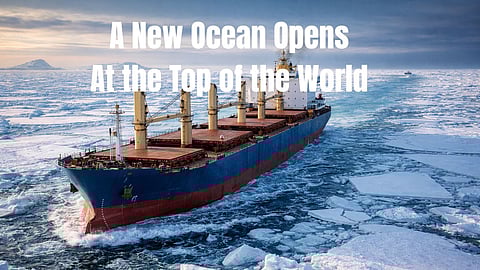
As Arctic sea ice continues to retreat, once-theoretical shipping routes are becoming commercially viable. The Northern Sea Route along Russia’s Arctic coast and the Northwest Passage through the Canadian Arctic promise shorter distances between Asia, Europe, and North America.
For global shipping firms, the appeal is simple: time saved is money saved. For governments, however, the opening of the Arctic is reshaping environmental debates and great-power politics at the same time.
The Economic Upside
For Europe and Asia-bound trade, Arctic routes can cut sailing distances by up to 40% compared with the Suez Canal. A container ship traveling from East Asia to Northern Europe via the Northern Sea Route can shave 10 to 14 days off its journey.
That means lower fuel costs, fewer emissions per voyage, and less exposure to chokepoints such as the Suez or the Strait of Malacca.
European ports see clear potential. Shorter routes could strengthen northern hubs like Rotterdam or Hamburg and reduce congestion further south. From the perspective of Russia, Arctic shipping is also a development strategy.
Moscow views the Northern Sea Route as a national transport corridor and a source of transit fees, investment, and regional growth in its sparsely populated Arctic territories.
Russia Begins New Express Logistics Services to China via Northern Route
Asian economies are paying close attention. South Korea, a global leader in shipbuilding, is investing heavily in ice-class vessels and icebreakers. Korean yards see Arctic shipping as a long-term market for specialized ships, from LNG carriers to research and support vessels.
China, meanwhile, has branded itself a “near-Arctic state” and promotes what it calls a Polar Silk Road, tying Arctic routes into its broader trade and infrastructure strategy.
Environmental Costs and Risks
The environmental argument for Arctic shipping cuts both ways. On paper, shorter routes mean lower carbon emissions per trip. In practice, the risks are severe. Arctic ecosystems are fragile, slow to recover, and poorly equipped to handle accidents.
Oil spills are the greatest fear. In icy waters with limited daylight, few ports, and harsh weather, cleanup would be slow and incomplete. Even routine operations carry risk.
Black carbon from ship exhaust settles on ice and snow, darkening surfaces and accelerating melting. Meanwhile, increased noise disrupts marine mammals that rely on sound to navigate and hunt.
There is also a feedback loop that troubles climate scientists. The more ice melts, the more traffic moves in. The more traffic moves in, the greater the emissions and disturbance that further speed ice loss. Environmental groups warn that treating the Arctic as a shipping shortcut risks locking in long-term damage for short-term gains.
Legal Gray Zones and Control
The politics of Arctic shipping are as complex as the environment is fragile. At the center is the question of control. Russia insists that much of the Northern Sea Route lies within its internal waters, giving it the right to regulate transit, require Russian pilots, and charge fees.
The United States and several European states argue that parts of the route qualify as an international strait, where freedom of navigation should apply.
This legal dispute is not academic. As traffic increases, so does the risk of confrontation. The US has stepped up freedom-of-navigation operations in polar regions, while Russia has expanded military infrastructure along its Arctic coast, officially to support search and rescue, but also to project power.
Europe’s position is more cautious. The European Union frames the Arctic primarily as a zone for cooperation, environmental protection, and scientific research. Yet European states are divided. Some emphasize climate leadership and strict regulation, while others quietly support commercial access that could benefit their ports and shipping companies.
China’s Long Game
China’s Arctic interest is economic and strategic rather than territorial. With most of its trade moving by sea, Beijing wants alternatives to routes vulnerable to conflict or blockade.
Arctic lanes offer diversification. Chinese firms have invested in Russian LNG projects and conducted trial voyages through Arctic waters, often in partnership with Russian operators.
This growing presence makes Western policymakers uneasy. While China lacks Arctic coastline, its technological, financial, and diplomatic weight means it will be hard to exclude. For the US and Europe, the challenge is balancing legitimate commercial access with concerns about security, transparency, and environmental standards.
Containers vs Bulk and LNG
One important point is that most Arctic traffic growth today is not container shipping. It is bulk cargo, project cargo, and especially LNG, much of it linked to Russian energy exports.
Specialized LNG carriers, often backed by state interests and long-term contracts, can tolerate higher costs and lower flexibility. Container lines cannot. Their business depends on volume, frequency, and predictability.
That structural difference explains much of the industry’s caution.
Major Shipping Lines Remain Skeptical and Climate-led
In a recent statement CEO of MSC, Soren Toft made it clear that MSC "do not and will not" use the Northern Sea Route as safe navigation cannot be assured. The risks for crews remain too high and increased traffic would put additional pressure on fragile ecosystems and local communities. Besides, there is no operational need for MSC to transit the Arctic.
Maersk is the most openly skeptical of Arctic container shipping among the major lines. The company conducted a high-profile trial voyage in 2018 with the Venta Maersk through the Northern Sea Route. The conclusion was blunt: the route did not make commercial sense for regular container services.
CMA CGM sits somewhere in the middle. The group has strong technical expertise, particularly through its LNG-powered fleet and experience with ice-class LNG carriers via affiliates and partners.
For now, the world’s major container lines, Arctic shipping remains a route of interest, not intent. They acknowledge the theoretical advantages. They monitor ice conditions, regulation, and geopolitics. Some run test voyages or technical studies. But none of the major players see the Arctic as ready for regular liner services.
Until the Arctic offers reliability comparable to Suez or Panama, along with clear environmental safeguards and legal clarity, most container shipping CEOs see it the same way: an option for tomorrow, and possibly never for containers at scale.
Window for Navigation Continues to Widen
Arctic shipping is unlikely to replace traditional routes anytime soon. Seasonal ice, insurance costs, limited infrastructure, and unpredictable weather keep volumes relatively low. Still, traffic is rising, and climate trends suggest that the window for navigation will continue to widen.
The central question is not whether Arctic shipping will grow, but how. Without strong international rules, the region could become a patchwork of national regulations, strategic competition, and environmental damage. With cooperation, it could remain tightly managed, limited to specific cargoes and seasons, with strict safety and emissions standards.
For now, the Arctic sits at an uncomfortable intersection of climate change and global trade. The melting ice offers opportunity, but it also exposes the cost of that opportunity. How countries along the Nothern Sea Route choose to navigate this new ocean frontier will shape not just shipping lanes, but the future of one of the planet’s most vulnerable regions.
Read More: IMO Bows to US Pushback, Delays Green Fuel Mandate for Global Shipping

