
Ramadan Peak: How Middle East Ports Keep Cargo Moving During The Holy Month

As Ramadan approaches, ports and logistics companies across the Middle East shift into a familiar, high-stakes operating mode: accelerating imports of food, household goods and retail stock while coping with compressed working hours, concentrated vessel calls and the knock-on effects of adjacent peak seasons such as Chinese New Year and the run-up to Eid.
The result is an intense, short window of elevated demand that tests terminal capacity, customs clearance and last-mile distribution networks — and forces firms to deploy a blend of planning, overtime, temporary hires and digital tools to avoid shortages and shipment rollovers.
Flattening the Curve Before the Crescent Moon
Ports begin preparations months in advance. Major operators encourage customers to pre-position inventory and stagger sailings to prevent yard congestion and reefer shortages.
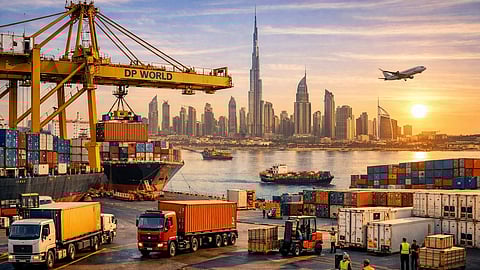
At DP World, for instance, terminals across the UAE and wider region regularly advise importers to “ship early” and spread cargo arrivals over several weeks.
Abdulla Bin Damithan, CEO & Managing Director, DP World GCC said: “Ramadan is a time when demand rises quickly. What we see each year is customers planning further ahead.
"By bringing ports, logistics and transport together through Jebel Ali, we are able to move goods early and keep supplies steady as demand increases across the region.”
At Jebel Ali Port, one of the world’s largest container hubs, volumes of staple foods and fast-moving consumer goods typically rise sharply in the weeks leading up to Ramadan as retailers bulk-buy essentials.

Operation during this period focused on handling a wide range of consumer goods, from packaged foods to fresh, chilled and frozen products. Extended operating hours and closer coordination across the supply chain helped protect temperature-sensitive cargo and improve efficiency by more than 25% during the peak period.
Insight: Ports as Power Players - Why Terminal Congestion Has Become a Geopolitical Issue
Jebel Ali also plays an important role in supporting exports ahead of Ramadan. During January and February, date exports see close to a 60% increase compared with a typical month, helping supply neighbouring markets across the GCC and East Africa.
India, Morocco and Bangladesh are were the main destination markets for dates exports, accounting for 65% of total export volumes through Jebel Ali Port.
By smoothing inbound flows, terminal operators reduce the risk of berth congestion and yard bottlenecks during the fasting month itself.
24-Hour Operations, Adjusted Office Hours
While administrative and customs offices often operate on reduced hours to accommodate Ramadan schedules, physical cargo handling rarely slows.
Container cranes, yard equipment and gate operations at major Gulf ports continue around the clock. The adjustment lies in staffing patterns: split shifts, staggered breaks around Iftar and Suhoor, and reinforced night operations help keep throughput steady.
Ports publish revised gate and documentation timings well in advance so freight forwarders and trucking companies can plan collections without creating last-minute surges.
This balance - continuous cargo movement combined with adapted administrative hours - ensures that productivity remains high even as the working day shortens.
Managing Capacity: Carriers and Forwarders Step In
Shipping lines and freight forwarders play a critical role in managing Ramadan peaks. Capacity allocations for reefer containers and food-grade equipment increase on key Asia–Gulf and Europe–Gulf routes.
Some carriers introduce additional sailings or temporary service adjustments to accommodate demand spikes.
When Ramadan coincides with other peak shipping events, particularly post-Chinese New Year restocking cycles, equipment shortages and rate volatility can emerge.
In such scenarios, regional logistics firms advise customers to confirm bookings weeks earlier than usual and remain flexible on routing and consolidation hubs. Air freight is occasionally used for high-value or time-sensitive SKUs in the final run-up to Eid, despite higher costs.
The Cold Chain: A Critical Pressure Point
Food logistics is the most sensitive segment during Ramadan. Supermarkets and wholesalers import larger volumes of meat, dairy, rice, dates and frozen goods, placing pressure on reefer yards and temperature-controlled warehouses.
Operators respond by allocating priority slots for refrigerated containers, expanding temporary cold-storage capacity and coordinating closely with customs authorities to expedite food clearances.
Dedicated reefer parks at ports such as Jebel Ali allow for plug-in capacity that safeguards perishable cargo even during peak dwell times.
Retailers, meanwhile, often adopt a “front-loading” strategy by building buffer inventory weeks ahead to protect against unforeseen shipping delays.
Digital Tools to Reduce Dwell Time
Technology has become a central lever in peak management. Terminal Operating Systems (TOS), digital gate appointment platforms and predictive ETA tools allow ports and logistics providers to maximise asset utilisation.
Truck appointment systems reduce queue times at port gates. Real-time yard monitoring tools enable operators to identify congestion hotspots early. Customs pre-clearance and electronic documentation submission cut down paperwork delays, which can otherwise become amplified under shortened Ramadan office hours.
For large 3PLs operating regional distribution centres, integrated supply chain visibility platforms allow warehouse managers to synchronise inbound deliveries with outbound retail replenishment, reducing storage strain during demand spikes.
Labour Planning and Contingency Buffers
Workforce planning is equally important. Many logistics firms hire temporary warehouse staff and drivers for the pre-Ramadan surge, while offering targeted overtime to experienced personnel. Night-time replenishment schedules become more common, aligning store restocking with consumer purchasing patterns that shift toward evenings during Ramadan.
Ports also maintain contingency berthing windows and standby labour teams to absorb unexpected vessel bunching. Should congestion arise at one gateway, alternative discharge ports within the Gulf Cooperation Council (GCC) network provide a safety valve.
Government Coordination and Policy Support
Ramadan peak management is not purely a commercial exercise. Customs authorities and port regulators across the region issue Ramadan-specific circulars detailing adjusted working hours, priority handling categories and clearance protocols.
Close coordination between port authorities, free zones and logistics operators helps minimise administrative bottlenecks. In some cases, food and humanitarian shipments are given expedited clearance to ensure supply continuity.
A Predictable but Demanding Stress Test
Ramadan represents a unique, culturally anchored logistics peak - predictable in timing but intense in execution. For ports and Middle East logistics companies, success hinges on early planning, digital visibility, flexible capacity and coordinated policy support.
Those that treat Ramadan not as a disruption but as a structured seasonal surge consistently maintain cargo flow, protect cold chains and keep retail shelves stocked.
In a region where trade reliability underpins food security and consumer confidence, the ability to manage this annual peak has become a benchmark of operational maturity.
Read More: Rise of the Data-Driven Smart Port
